SBT Partners
  • Total IT Management
        • AI Solutions
        • Helpdesk
        • Cybersecurity
        • Microsoft 365
        • Modern Cloud Services
        • Data Backup
        • Business Continuity
        • Infrastructure & Endpoint Management
        • Virtual CIO
        • Collaboration
  • Industries
    • Construction
    • Manufacturing
    • Nonprofits
    • Professional Services
    • Property Management
  • The SBT Partnership
    • SBT Solution Stack
    • The Modern Workplace
    • Technology as a Service
    • Procurement as a Service
    • IT Strategy Committee
    • SBT Partnership Rewards
    • About Us
  • Resources
    • Upgrade Your MSP
    • Blog
    • Videos
    • Careers
    • Locations
      • Charlotte
      • Detroit
  • Contact Us
  • Menu Menu
Managed Services Detroit Button CYBERSECURITY

What Industries Are the Most Vulnerable to Cyber Attacks?

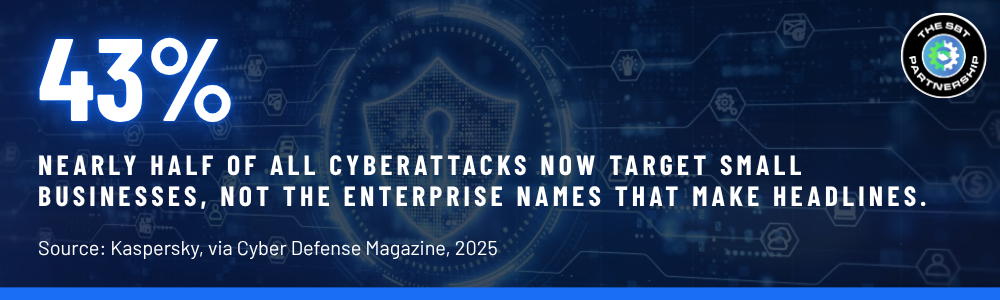
Not every business is a target for the same reasons, and using computers alone doesn’t put you at risk. Attackers weigh how valuable the data is, how easy the network is to break into, and how likely the victim is to pay quietly rather than risk a public breach. Here’s what actually puts an industry in a hacker’s crosshairs, and where your business likely stands.

Cybercriminals aren’t picking targets at random, and they’re not only chasing the biggest paydays either. They’re following a much simpler formula: which industries hold data worth stealing, and which ones are the easiest to get into. Some sectors check both boxes at once, which is exactly why the same handful of industries keep showing up at the top of every breach report, year after year.

If your business operates in one of those industries, the risk isn’t hypothetical. It’s a matter of when an attacker takes a serious run at your systems, not if. Here’s what actually determines an industry’s risk level, which sectors carry the most exposure right now, and what a real defense looks like for a small or midsized business that can’t afford to guess.

Copilot+ PC stat

What Makes an Industry a Target for Cybercriminals?

Every high-risk industry shares a version of the same profile. It’s rarely one factor on its own. It’s usually a combination of what an attacker stands to gain and how easy the business is to breach.

  • The value of the data. Medical records, financial account numbers, and Social Security numbers sell for far more on the dark web than a stolen email address, and they take longer for a victim to fully recover from.
  • Thin security budgets relative to data sensitivity. A hospital network or accounting firm often handles data as sensitive as a bank’s, without a bank’s security budget or dedicated IT security staff.
  • A large or messy attack surface. Field crews, remote job sites, shared devices, and legacy software all create more entry points than a single-office, single-network business.
  • Regulatory and reputational pressure. Industries bound by HIPAA, PCI-DSS, or client confidentiality rules are more likely to pay a ransom quietly rather than risk fines or public disclosure, which attackers know and price into their targeting.
  • Reliance on vendors and third parties. The more subcontractors, suppliers, and software vendors touch your systems, the more doors an attacker has to try.

Put simply: attackers target industries where the data is valuable, the defenses are inconsistent, and the pressure to pay up quietly is high. That combination shows up more in some sectors than others.

The Industries Most at Risk for Cyber Attacks

Based on breach frequency, average cost per incident, and how often each sector shows up in current threat intelligence, these are the industries facing the steepest cybersecurity risk right now.

1. Healthcare
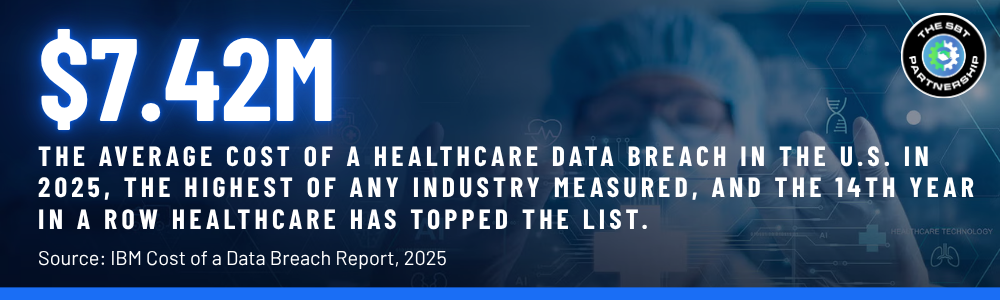
Healthcare has held the top spot in IBM’s Cost of a Data Breach Report for 14 consecutive years, and it’s not close. Patient records combine medical history, insurance details, and personal identifiers in one file, which makes them worth far more to criminals than a typical financial record. Add in outdated hospital systems, connected medical devices, and HIPAA’s disclosure requirements, and healthcare organizations end up sitting on some of the richest, worst-defended targets in any industry.

2. Financial Services & Insurance
Banks, credit unions, insurance agencies, and financial advisors are direct paths to money, which makes them a permanent priority for attackers. Business email compromise, in particular, thrives here: a convincing email asking a bookkeeper to redirect a wire transfer can bypass every technical safeguard on the network. Heavy compliance requirements (GLBA, PCI-DSS) also mean a breach carries steep regulatory consequences on top of the direct loss.

3. Manufacturing
Manufacturers have become one of the most targeted sectors for ransomware, largely because downtime is so expensive. A halted production line costs money by the hour, which makes manufacturers more likely to pay quickly to get back online. Add legacy operational technology (OT), a growing number of connected industrial devices, and a long chain of suppliers and vendors, and manufacturers face a wide, hard-to-monitor attack surface. See how SBT supports manufacturers →

4. Professional Services (Legal, Accounting & Consulting)
Law firms, accounting practices, and consultancies are trusted with some of the most sensitive information their clients have: contracts, financials, litigation strategy, tax records. That makes them an efficient way for an attacker to compromise several downstream victims through a single breach, and it’s part of why these firms are increasingly named in ransomware and data-extortion campaigns. See how SBT supports professional services firms →

5. Construction
Construction has been slower than most industries to modernize its IT, and attackers have taken notice. Bids, contracts, and payroll data move constantly between general contractors, subcontractors, and vendors, often over email with minimal verification. That’s a near-perfect setup for business email compromise and invoice fraud, especially on active job sites where staff turnover is high and shared devices are common. See how SBT supports construction firms →

6. Property Management
Property management companies sit on a deep well of tenant and owner data: Social Security numbers, bank account details, lease agreements, and payment histories, often spread across several disconnected software platforms. That patchwork of systems, combined with frequent wire transfers for rent, deposits, and vendor payments, makes the sector an attractive and often under-protected target. See how SBT supports property managers →

7. Nonprofits & Education
Nonprofits and schools typically run on the tightest IT budgets of any sector on this list, while still holding donor payment data, student records, or beneficiary information that’s just as valuable to attackers as anything a for-profit business holds. Limited staff and volunteer turnover make consistent security training difficult to sustain, which is exactly the kind of gap ransomware operators look for. See how SBT supports nonprofits →

Copilot+ PC stat

Common Attack Methods Used Against High-Risk Industries

The industries above face different consequences from a breach, but the methods attackers use to get in are surprisingly consistent across all of them. Most successful attacks trace back to one of a handful of well-worn tactics:

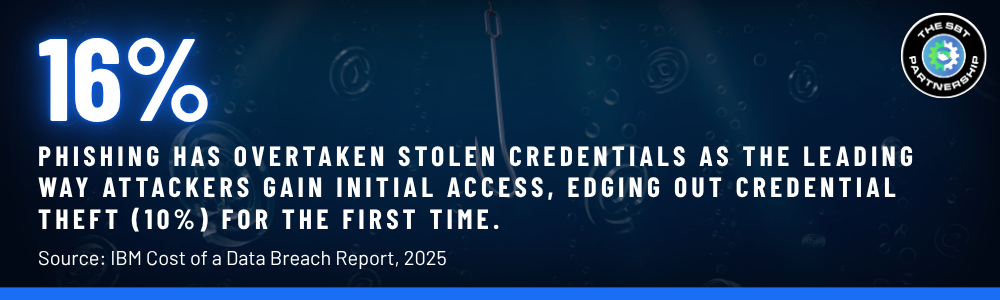
  • Phishing and business email compromise. Now the single most common way attackers gain initial access, and increasingly hard to catch with traditional spam filters.
  • Ransomware. Attackers encrypt critical systems and demand payment to restore access, betting that downtime costs more than the ransom.
  • Stolen or reused credentials. A password leaked in an unrelated breach often unlocks a completely different account, especially without multi-factor authentication in place.
  • Third-party and supply chain compromise. Attackers breach a smaller, less-defended vendor to reach a larger, better-defended target further down the chain.
  • Insider risk. Not always malicious. A single distracted employee clicking the wrong link accounts for a large share of successful breaches across every industry.
Copilot+ PC stat
Related Read: How Modern Phishing Bypasses Traditional Email Filters →

Why Cybersecurity Risk Looks Different Across Industries

Two businesses can face the exact same phishing email and walk away with completely different outcomes, because what’s actually at stake, and who’s watching, isn’t the same from one industry to the next.

 
Industry Primary data at risk Most common attack vector Regulatory pressure
Healthcare Patient records, insurance data Ransomware, phishing High (HIPAA)
Financial services Account numbers, wire instructions Business email compromise High (GLBA, PCI-DSS)
Manufacturing IP, production/OT systems Ransomware, third-party access Moderate
Professional services Client records, contracts Phishing, credential theft Moderate to high
Construction Payroll, bids, vendor payments Invoice fraud, BEC Low to moderate
Property management Tenant financial/personal data Phishing, credential theft Moderate
Nonprofits & education Donor/student records Ransomware, phishing Low to moderate
 

That last column matters more than it looks. Higher regulatory pressure often means an organization is more likely to pay a ransom quietly to avoid disclosure requirements, which is exactly why attackers keep those industries near the top of their target lists.

Warning Signs Your Business Could Already Be a Target

Most breaches don’t start with an obvious red flag. They start with something small enough to ignore. Watch for:

  • A spike in phishing or spoofed emails impersonating vendors, executives, or your own IT team.
  • Unfamiliar login attempts or MFA prompts you didn't trigger, especially from unusual locations.
  • Employee credentials showing up in dark web monitoring from breaches unrelated to your business.
  • Slower systems or unexplained new software running in the background.
  • A vendor or partner reporting their own breach, which puts any data or access you've shared with them at risk too.
Worth knowing: a single leaked employee password is often all it takes for an attacker to get a foothold, long before ransomware or a full-blown breach ever appears on anyone's radar.
Related Read: The Dark Web: One Leaked Password Is All It Takes →

Top Cybersecurity Solutions for SMBs in High-Risk Industries

None of this means high-risk industries are defenseless, it means the defense has to match the risk. For SMBs specifically, that usually looks like a layered approach rather than any single tool:

  • Endpoint detection and response (EDR/MDR). Continuous monitoring that catches and contains threats on devices before they spread across the network.
  • Dark web monitoring. Ongoing scans for leaked employee or company credentials, so exposed passwords get changed before they’re used.
  • Email security and DMARC enforcement. Filtering that catches spoofed domains and sophisticated phishing attempts standard spam filters miss.
  • Security awareness training and phishing simulations. Since human error remains the single biggest factor in successful breaches, ongoing training closes the gap technology can’t.
  • Immutable, tested backups. The difference between a quick recovery and a ransom decision often comes down to whether backups were actually verified beforehand.
  • Multi-factor authentication everywhere it’s supported. Still one of the single most effective, lowest-cost defenses against credential-based attacks.

This is exactly what the SBT Solution Stack was built to address. By combining a curated collection of best-in-class cybersecurity technologies into a single, integrated solution, SBT helps organizations close security gaps, strengthen resilience, and create multiple layers of protection that work together to prevent, detect, respond to, and recover from cyber threats.

Related Read: The Real Cost of a Data Breach for a Small Business →

Finding the Right Cybersecurity Partner

Buying individual security tools rarely adds up to real protection. Point solutions that don’t talk to each other leave gaps, and most in-house IT teams at small and midsized businesses don’t have the bandwidth to monitor a dozen separate dashboards around the clock.

A managed IT partner that understands your specific industry, not cybersecurity in the abstract, but the actual risks facing a manufacturer, a professional service firm, or a property management company, is usually the more realistic path. Look for a partner who can show you:

  • A documented security stack, not a vague promise of “enterprise-grade protection”
  • Experience with the compliance requirements specific to your industry
  • 24/7 monitoring and response, not business-hours-only support
  • A clear incident response plan you’ve actually seen, not just heard about

The businesses that weather an attempted attack well aren’t the ones that got lucky. They’re the ones who built a defense that matched their actual risk profile before they needed it.

SBT Partners

Not Sure Where Your Business Stands?

We'll assess your current risk exposure against what businesses in your industry are actually facing, and build a security plan that fits your budget and compliance needs.

GET A CYBERSECURITY ASSESSMENT→

Share This Post

  • Share on Facebook
  • Share on X
  • Share on WhatsApp
  • Share on Pinterest
  • Share on LinkedIn
  • Share on Tumblr
  • Share on Vk
  • Share on Reddit
  • Share by Mail

More Like This

What Industries Are the Most Vulnerable to Cyber Attacks?

Cybersecurity
Not every business is a target for the same reasons. Here's what actually puts an industry in a hacker's crosshairs, and where your business likely stands.
September 10, 2026
https://www.sbtpartners.com/wp-content/uploads/2026/09/Designer-43.jpg 1024 1536 [email protected] /wp-content/uploads/2023/11/SBT-Logo-Color_a3b47f75244ae0f19b0c6e42706a26e8-1.png [email protected]2026-09-10 14:06:352026-09-10 15:32:10What Industries Are the Most Vulnerable to Cyber Attacks?

The Real Cost of a Data Breach for a Small Business

Cybersecurity
Small and midsized businesses are frequent breach targets due to fewer security controls. See what a data breach actually costs, its most common causes, and how proactive IT reduces risk.
August 20, 2026
https://www.sbtpartners.com/wp-content/uploads/2026/08/Designer-39.png 1024 1536 [email protected] /wp-content/uploads/2023/11/SBT-Logo-Color_a3b47f75244ae0f19b0c6e42706a26e8-1.png [email protected]2026-08-20 14:40:402026-08-20 14:41:42The Real Cost of a Data Breach for a Small Business

The Dark Web: One Leaked Password Is All It Takes

Cybersecurity
How the SBT Solution Stack helps identify credential exposures, uncover hidden risks, and proactively protect your business before threats become security incidents.
August 12, 2026
https://www.sbtpartners.com/wp-content/uploads/2026/08/1726750210_img-darkweb.webp 613 871 [email protected] /wp-content/uploads/2023/11/SBT-Logo-Color_a3b47f75244ae0f19b0c6e42706a26e8-1.png [email protected]2026-08-12 14:20:132026-08-14 20:52:58The Dark Web: One Leaked Password Is All It Takes

You Have Security Tools. But Do You Have a Security Plan?

Cybersecurity
The biggest gap for SMBs in 2026 isn't tool availability. It's the governance gap that leaves your existing technology exposed.
April 23, 2026
https://www.sbtpartners.com/wp-content/uploads/2026/04/GettyImages-1348795158-cyber-security.webp 194 345 [email protected] /wp-content/uploads/2023/11/SBT-Logo-Color_a3b47f75244ae0f19b0c6e42706a26e8-1.png [email protected]2026-04-23 10:55:062026-07-14 13:59:22You Have Security Tools. But Do You Have a Security Plan?

How Modern Phishing Bypasses Traditional Email Filters

Cybersecurity
Phishing attacks have changed. Today’s emails look legitimate, arrive at the right moment, and often pass traditional security checks.
April 2, 2026
https://www.sbtpartners.com/wp-content/uploads/2026/04/Phishing.jpg 485 913 [email protected] /wp-content/uploads/2023/11/SBT-Logo-Color_a3b47f75244ae0f19b0c6e42706a26e8-1.png [email protected]2026-04-02 16:16:462026-07-12 13:58:37How Modern Phishing Bypasses Traditional Email Filters

Why iPhone Updates Matter More Than Ever

Cybersecurity
Apple doesn't frequently issue public security warnings, which is why this one deserves attention. If you're not updated, your data is at risk.
March 26, 2026
https://www.sbtpartners.com/wp-content/uploads/2026/03/ios.png 907 1617 [email protected] /wp-content/uploads/2023/11/SBT-Logo-Color_a3b47f75244ae0f19b0c6e42706a26e8-1.png [email protected]2026-03-26 10:50:422026-07-12 13:58:37Why iPhone Updates Matter More Than Ever

The SMB Owner’s Guide to Fewer Tech Headaches

Cybersecurity, Managed IT, The SBT Partnership
Most SMB tech problems are preventable with consistent habits. This concise guide breaks down the five practices that keep your business running smoothly.
February 27, 2026
https://www.sbtpartners.com/wp-content/uploads/2026/02/Untitled-29.png 1080 1080 [email protected] /wp-content/uploads/2023/11/SBT-Logo-Color_a3b47f75244ae0f19b0c6e42706a26e8-1.png [email protected]2026-02-27 09:50:252026-07-12 13:58:40The SMB Owner’s Guide to Fewer Tech Headaches

Cyber Hygiene in 2026

Cybersecurity, Miscellaneous
Cyber hygiene is the foundation of cybersecurity in 2026. Learn how SMBs can defend against threats with smart habits, training, and affordable tools.
November 17, 2025
https://www.sbtpartners.com/wp-content/uploads/2025/11/Screenshot-2025-11-14-114035-1.png 1274 1562 [email protected] /wp-content/uploads/2023/11/SBT-Logo-Color_a3b47f75244ae0f19b0c6e42706a26e8-1.png [email protected]2025-11-17 10:14:592026-07-12 13:58:47Cyber Hygiene in 2026
ReCAPTCHA and Malware: What You Need to Know

ReCAPTCHA and Malware: What You Need to Know

Cybersecurity
Discover how cybercriminals use fake reCAPTCHA and malware and learn practical steps to protect your small-to-midsize business.
May 12, 2025
https://www.sbtpartners.com/wp-content/uploads/2025/05/ReCAPTCHA-and-Malware-What-You-Need-to-Know.jpg 1250 2000 Abstrakt Marketing /wp-content/uploads/2023/11/SBT-Logo-Color_a3b47f75244ae0f19b0c6e42706a26e8-1.png Abstrakt Marketing2025-05-12 08:52:232026-07-12 13:58:57ReCAPTCHA and Malware: What You Need to Know
Previous Previous Previous Next Next Next

Categories

  • AI
  • Cloud Computing
  • Cloud Solutions
  • Copilot
  • Cybersecurity
  • Data Backup
  • Help Desk
  • InTune
  • IT Roadmap
  • Managed IT
  • Managed Services
  • Miscellaneous
  • Modern Workplace
  • News
  • Office 365
  • SharePoint
  • Technology as a Service
  • The IT Strategy Committee
  • The SBT Partnership
  • Total IT Management

Contact Us

"*" indicates required fields

This field is for validation purposes and should be left unchanged.
Google
Google star 1Google star 2Google star 3Google star 4Google star 5
5.0
Top Rated Service 2026
verified by Trustindex
Trustindex verifies that the company has a review score above 4.5, based on reviews collected on Google over the past 12 months, qualifying it to receive the Top Rated Certificate.


What We Do

AI Solutions

Helpdesk

Cybersecurity

Microsoft 365

Virtual CIO

Collaboration

Data Backup

Business Continuity

Modern Cloud Services

Infrastructure & Endpoint Management

The SBT Partnership

SBT Solution Stack

The Modern Workplace

Technology as a Service

Procurement as a Service

IT Strategy Committee

SBT Partnership Rewards

About Us

Locations

Contact Us

Charlotte
1619 Providence Road S, Suite 220-135
Marvin, NC 28173

(704) 626 1001

Detroit
143 Cadycentre, Suite 166,
Northville, MI 48167

(313) 251 4031

Website by Abstrakt Marketing Group ©
  • Privacy Policy
  • Sitemap
  • Linkedin
  • YouTube
Scroll to top Scroll to top Scroll to top

This site uses cookies. By continuing to browse the site, you are agreeing to our use of cookies.

AcceptLearn more

Cookie and Privacy Settings


How we use cookies

We may request cookies to be set on your device. We use cookies to let us know when you visit our websites, how you interact with us, to enrich your user experience, and to customize your relationship with our website.

Click on the different category headings to find out more. You can also change some of your preferences. Note that blocking some types of cookies may impact your experience on our websites and the services we are able to offer.

Essential Website Cookies

These cookies are strictly necessary to provide you with services available through our website and to use some of its features.

Because these cookies are strictly necessary to deliver the website, refusing them will have impact how our site functions. You always can block or delete cookies by changing your browser settings and force blocking all cookies on this website. But this will always prompt you to accept/refuse cookies when revisiting our site.

We fully respect if you want to refuse cookies but to avoid asking you again and again kindly allow us to store a cookie for that. You are free to opt out any time or opt in for other cookies to get a better experience. If you refuse cookies we will remove all set cookies in our domain.

We provide you with a list of stored cookies on your computer in our domain so you can check what we stored. Due to security reasons we are not able to show or modify cookies from other domains. You can check these in your browser security settings.

Other external services

We also use different external services like Google Webfonts, Google Maps, and external Video providers. Since these providers may collect personal data like your IP address we allow you to block them here. Please be aware that this might heavily reduce the functionality and appearance of our site. Changes will take effect once you reload the page.

Google Webfont Settings:

Google Map Settings:

Google reCaptcha Settings:

Vimeo and Youtube video embeds:

Accept settingsHide notification only
  • Quick Quote
  • Speak to an Expert
  • Remote Support